Free PDF · No spam
Get 7 more Filipino recipes with the macros done for you
Grab the free Filipino Shred Starter — 7 high-protein Filipino recipes with the macros locked in, plus a 3-day starter training split. The exact system Christian builds for his clients.
Ahi Poke
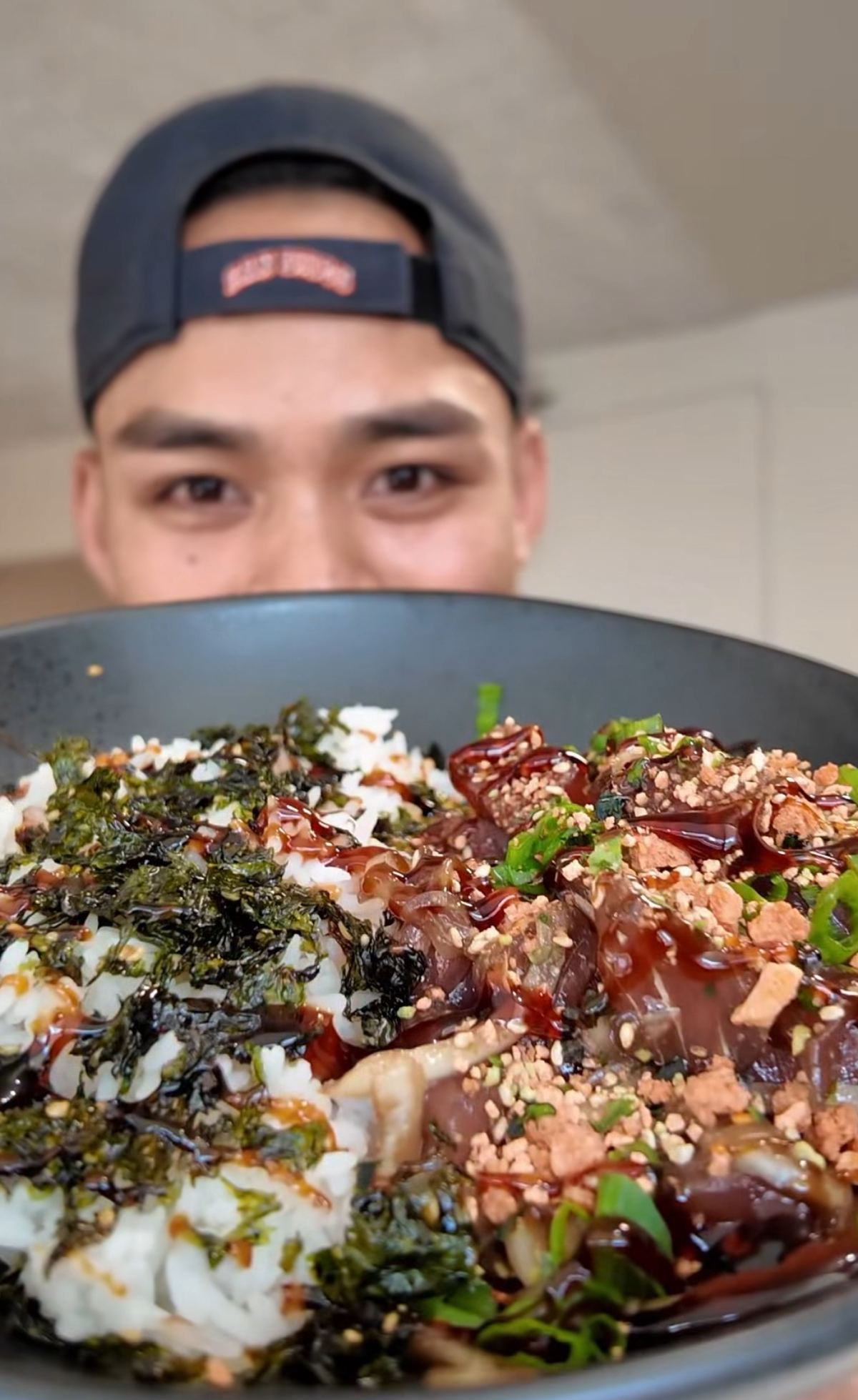
Fresh cubed ahi tuna tossed with shoyu, sesame oil, and oyster sauce, served over rice with furikake and unagi drizzle. A Hawaiian staple that's already naturally high-protein and low-fat — this version clocks 53g protein per bowl.
Macro Breakdown (Per Serving)
The Story Behind Poke
Poke (pronounced poh-keh) is a Hawaiian staple that goes back centuries. Long before it became a mainland food trend, Native Hawaiians were cutting reef fish into cubes, seasoning with sea salt, seaweed, and crushed kukui nuts, and eating it as a simple fisherman's meal. The word itself means "to slice" or "to cut crosswise" in Hawaiian.
The modern version — with shoyu, sesame oil, and rice — reflects Hawaii's deep Japanese and Asian culinary influence. Every poke counter on the islands has its own spin, from spicy mayo to wasabi to kimchi. It's street food, comfort food, and high-protein fuel all in one bowl.
For Christian's kitchen, poke is a no-brainer: raw ahi tuna is one of the leanest, highest-protein foods you can eat. At just 4g fat per serving with 53g protein, this is about as clean as a meal gets — and you don't have to sacrifice any flavor to get there.
Ingredients
- 2 lbs fresh ahi tuna, cubed (Costco)
- 1 tbsp salt
- 4 tbsp shoyu / soy sauce
- 1 tbsp oyster sauce
- 1 tbsp sesame oil
- 1/4 sweet onion, julienned
- 1 green onion, sliced
- Unagi sauce (for drizzle)
- Furikake (for topping)
- Chopped seaweed (for topping)
- 6 oz cooked rice (per serving)
Instructions
Prep the aromatics. Julienne the sweet onion into thin strips. Cut the green onion into small rings. Set aside.
Cut the ahi. Cut the fresh ahi tuna into bite-sized cubes, roughly 3/4-inch pieces. Keep the cuts uniform so everything marinates evenly.
Combine and marinate. In a large bowl, toss the cubed ahi with salt, shoyu, oyster sauce, sesame oil, sweet onion, and green onion. Mix gently — you don't want to mash the fish. Cover and refrigerate for 30-60 minutes.
Plate and serve. Scoop 6 oz of cooked rice into a bowl. Top with a generous portion of marinated poke. Drizzle with unagi sauce, sprinkle furikake, and add chopped seaweed on top. Serve immediately.
💡 Christian's Tips
- Buy sushi-grade ahi from Costco. Their frozen ahi tuna steaks are high quality and much cheaper than fish markets. Thaw in the fridge overnight before cubing.
- Don't over-marinate. 30-60 minutes is the sweet spot. Any longer and the acid in the shoyu starts to "cook" the fish like ceviche, changing the texture.
- Swap rice for cauliflower rice to drop this bowl under 300 calories while keeping the 53g protein intact. Game changer for a cut.
- Meal prep the marinade separately. Mix everything except the fish. When you're ready to eat, cube the tuna fresh and toss it in. Poke is best eaten same-day.
Full Nutrition Facts
| Nutrient | Per Serving |
|---|---|
| Calories | 513 kcal |
| Protein | 53g |
| Total Carbohydrates | 63g |
| Dietary Fiber | 1g |
| Total Fat | 4g |
| Saturated Fat | 0.8g |
| Cholesterol | 102mg |
| Sodium | 1450mg |
| Potassium | 580mg |
| Iron | 2.4mg |
Common Questions
Is it safe to eat raw ahi tuna?
Yes, as long as you use sushi-grade (previously frozen) ahi tuna. Flash-freezing kills parasites. Costco's ahi tuna steaks are safe for raw consumption. Always thaw in the fridge, never at room temperature.
Can I use a different fish for poke?
Salmon is the most popular alternative and works great — it's fattier (about 12g fat per serving) but still high protein. You can also use yellowtail (hamachi) or octopus for different textures and flavors.
How do I lower the sodium in this recipe?
Use low-sodium soy sauce (about 40% less sodium) and reduce the salt to 1/2 tbsp. You can also skip the oyster sauce and add a squeeze of lime instead. The furikake also adds sodium, so use it sparingly.