Free PDF · No spam
Get 7 more Filipino recipes with the macros done for you
Grab the free Filipino Shred Starter — 7 high-protein Filipino recipes with the macros locked in, plus a 3-day starter training split. The exact system Christian builds for his clients.
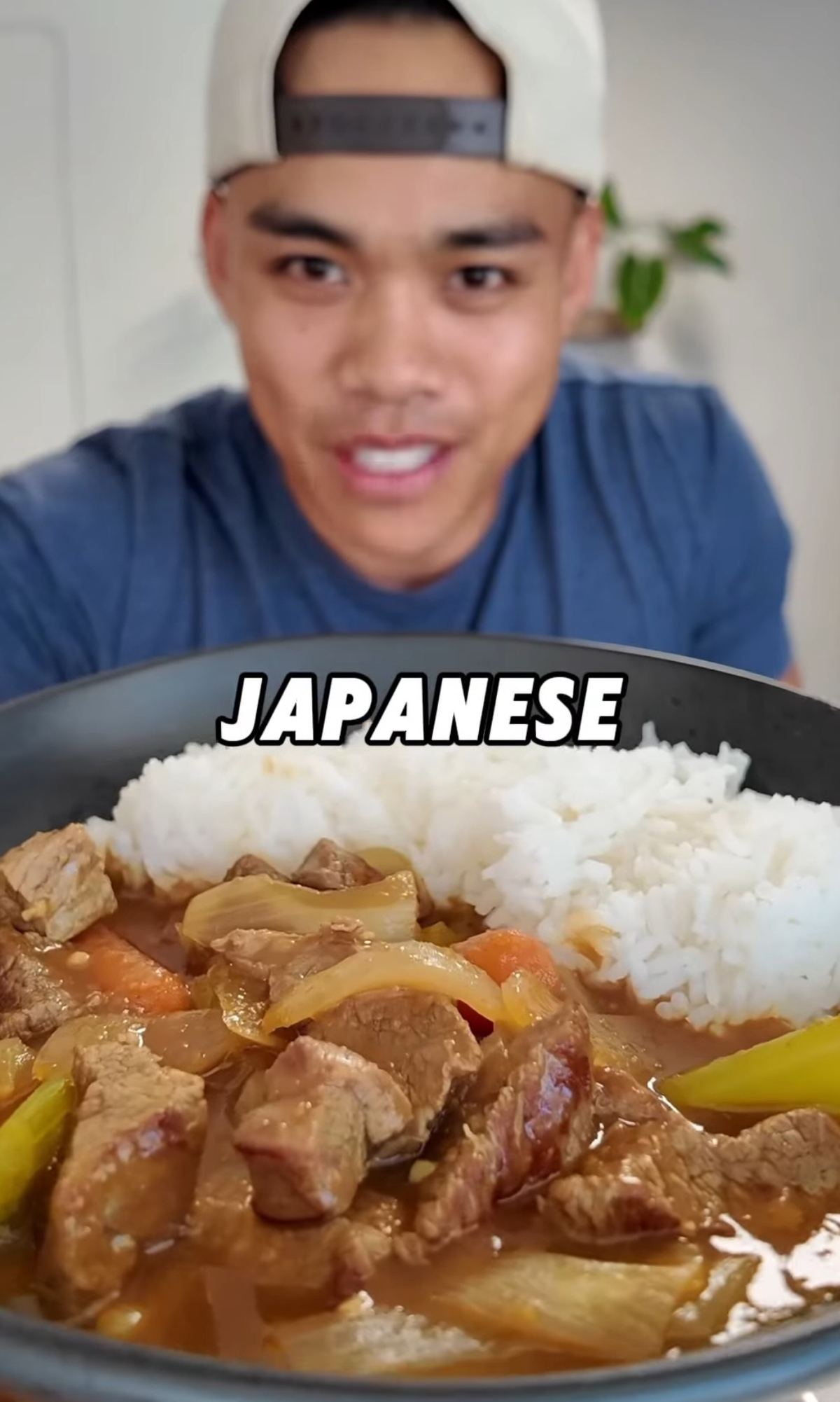
Japanese Beef Curry
Rich, thick Japanese curry with lean tri-tip, carrots, celery, and a secret weapon: pureed Fiji apple for natural sweetness. Golden curry cubes dissolved into a savory-sweet sauce over rice. 42g protein, 598 calories, pure comfort.
Macro Breakdown (Per Serving)
The Story Behind Japanese Curry
Japanese curry (kare raisu) is nothing like Indian curry — it's thicker, sweeter, milder, and served over rice rather than with naan. It was introduced to Japan by the British Navy in the late 1800s, and by the mid-20th century it had become one of Japan's most popular home-cooked meals. Every Japanese household has their own version, and every convenience store sells it pre-made.
The magic is in the curry roux — those little blocks (Golden Curry, Vermont Curry, Java Curry) that dissolve into the broth and create that signature thick, glossy sauce. Each brand has a slightly different spice blend, but they all deliver that umami-sweet-savory profile that makes Japanese curry so addictive.
Christian grew up eating Japanese curry alongside Filipino food — San Diego's proximity to both cultures made it inevitable. His version uses lean tri-tip instead of fatty chuck, pureed apple for natural sweetness (a Japanese restaurant trick), and loads up on vegetables to keep the volume high and the calories reasonable. At 598 calories with 42g protein, it's comfort food that actually fits the plan.
Ingredients
- 2.5 lbs lean tri-tip, cubed 1/2 inch
- 1 onion, julienned
- 1 tbsp garlic, minced
- 2 sticks celery, sliced
- 2 carrots or ~20 baby carrots
- 1 box Golden Curry cubes
- 1 Fiji apple, peeled and pureed
- 5 cups stock (beef or chicken)
- 1 tbsp ketchup
- 1 tbsp honey
- 1 tbsp soy sauce
- Salt to taste
- 8 oz cooked rice (per serving)
Instructions
Prep everything. Julienne the onion. Mince the garlic. Slice the celery. Cut carrots into bite-size pieces. Cube the tri-tip into half-inch pieces. Peel and puree the apple in a blender.
Sear the beef. Heat a large pot or Dutch oven over high heat. Sear the beef in batches — don't crowd the pot. You want a hard brown crust on each piece. Set aside when done.
Cook the onions. In the same pot, add the julienned onions and cook for about 5 minutes until softened and starting to caramelize.
Build the sauce base. Add garlic, apple puree, stock, soy sauce, honey, and ketchup. Stir to combine.
Add meat and vegetables. Return the seared beef to the pot. Add celery and carrots. Bring to a simmer and skim any scum that rises to the surface.
Dissolve the curry blocks. This is key — don't just drop them in. Take about 1 cup of the hot sauce out, dissolve half the curry blocks in it separately, then pour it back. Repeat with the remaining blocks. This prevents lumps and gives you even flavor.
Simmer until tender. Let everything simmer for 15-20 minutes on low heat until the carrots are tender and the sauce is thick and glossy.
Season and serve. Taste and adjust with salt if needed. Serve a generous ladle (about 16 oz) of curry over 8 oz of cooked rice.
💡 Christian's Tips
- The apple puree is the secret weapon. Japanese restaurants all use grated apple in their curry — it adds natural sweetness and body without extra sugar. Fiji apples work best because they're sweeter, but any apple will do.
- Dissolve curry blocks separately. The biggest mistake people make is dropping the blocks directly into the pot. They clump up and distribute unevenly. The extra 2 minutes of dissolving them separately makes a massive difference.
- This gets better the next day. Japanese curry is one of the best meal prep dishes because the flavors deepen overnight. Make the full batch and eat it for 4-5 days.
- Swap rice for cauliflower rice to cut about 200 calories per serving. The thick curry sauce coats cauliflower rice just as well as white rice.
- Use lean tri-tip, not chuck. Chuck roast is traditional but runs 20-25g fat per serving. Lean tri-tip cuts that in half while keeping the flavor with the sear and the sauce.
Full Nutrition Facts
| Nutrient | Per Serving |
|---|---|
| Calories | 598 kcal |
| Protein | 42g |
| Total Carbohydrates | 79g |
| Dietary Fiber | 5g |
| Total Fat | 11g |
| Saturated Fat | 4g |
| Cholesterol | 95mg |
| Sodium | 1280mg |
| Potassium | 680mg |
| Iron | 4.8mg |
Common Questions
Which curry block brand is best?
S&B Golden Curry (medium hot) is Christian's go-to. It has the best balance of sweetness and spice. Java Curry is spicier, Vermont Curry is sweeter. All work — it's personal preference. Find them at any Asian grocery store or Amazon.
Can I use chicken instead of beef?
Absolutely. Chicken thigh is the best swap — it stays tender in the simmer and has more flavor than breast. Use 2.5 lbs boneless skinless chicken thigh cubed. You'll save about 2g fat per serving and the protein stays roughly the same.
How do I make it spicier?
Use "Hot" level curry blocks instead of "Medium." You can also add 1-2 tsp cayenne pepper or a splash of S&B chili oil when plating. Some people add a spoonful of gochujang (Korean chili paste) for a fermented heat that pairs beautifully with the sweetness.