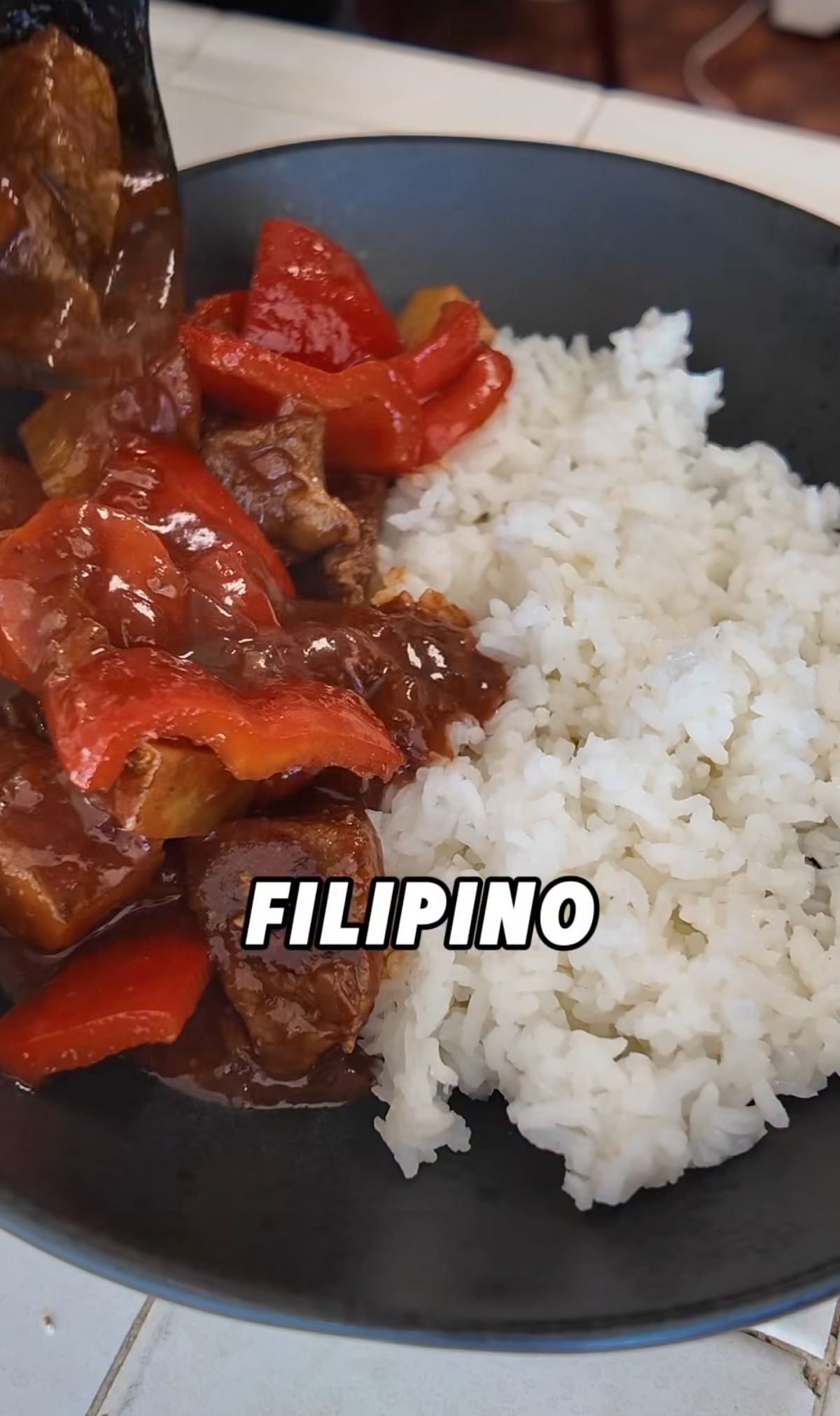
Adobo Three Ways: Cutting Fat Without Killing Flavor
Most adobo lives on the stove in one version: pork belly, soy sauce, white cane vinegar, garlic, and an hour of simmering until the sauce is dark and the meat pulls apart at a fork. It is an exceptional dish. It is also, at roughly 570 kcal and 52g of fat per 150g serving, a version that makes daily eating during a fat loss phase difficult to sustain without consistently blowing your calorie target.
Why Adobo Is Already a Fitness Food in Disguise
The standard adobo recipe is built almost entirely on zero- and near-zero-calorie flavor compounds. Vinegar adds no meaningful calories. Garlic is negligible. Bay leaves and whole black peppercorns are aromatics, not calorie sources. Soy sauce adds roughly 10 kcal per tablespoon — in a standard batch using 1/3 cup across 500–700g of meat, that works out to under 10 kcal per serving.
The fat in adobo comes entirely from the meat. This is what makes the dish structurally unusual from a nutrition standpoint: change the protein source, and you change the macro profile of the entire dish without touching the flavor base. Most braised dishes do not give you that level of flexibility, because the fat is built into the sauce ingredients themselves. In adobo, the sauce is the vehicle and the protein is the driver.
This is why the dish has been made in countless regional variations for generations — the vinegar-soy-garlic-bay framework holds regardless of what protein goes into the pot. For fitness purposes, that structural flexibility is something worth putting to use deliberately.
The Three-Way Macro Breakdown for Adobo
Before technique, the numbers. These are estimated per 150g serving of cooked meat with a standard adobo preparation, using USDA FoodData Central as the reference for each protein source:
The protein-to-calorie ratio is the metric that matters for fat loss. Pork belly adobo costs 27 kcal to deliver each gram of protein. Chicken thigh adobo costs 6 kcal per gram — roughly four times more efficient at the same 150g serving size. All three use the same vinegar-soy-garlic flavor base. The only variable is what you are getting nutritionally from the dish.
Version 1 — Classic Pork Belly Adobo: The Baseline
Understanding the baseline matters before modifying it. Classic pork belly adobo uses liempo, which runs approximately 50–55% fat by weight raw. When you braise pork belly for 60–90 minutes, the fat renders into the braising liquid and concentrates as the sauce reduces. That rendered fat is most of the calorie load — and most of what makes the dish taste the way it does.
Standard technique: Cut liempo into 1.5–2 inch pieces. Combine in a heavy pot with 1/3 cup soy sauce, 1/2 cup white cane vinegar, one full head of smashed garlic, 3–4 bay leaves, 1 teaspoon whole black peppercorns, and enough water to just cover the meat. Bring to a boil, reduce heat, and simmer covered for 45–60 minutes until pork is tender. Remove the lid, raise heat, and reduce the sauce until it glazes the meat — roughly 15–20 more minutes. Optional finishing step: remove the pork pieces and sear skin-side down in a hot dry pan for 2–3 minutes to crisp the exterior before returning to the sauce.
This version is what most Filipino households default to because pork belly tolerates long braising well, stays moist throughout, and produces a rich, deeply savory reduced sauce. It is also the least efficient version calorically. When to eat Version 1: maintenance phases, family dinners, occasions when you are not tracking. This is not a daily cut meal, but it is a dish you should still make and eat. Understanding the macro cost means you make informed decisions about portion size — not that you eliminate the dish.
Version 2 — Chicken Thigh Adobo: The Sustainable Cut Version
Chicken thigh handles adobo preparation more similarly to pork belly than any other lean protein. It has enough intramuscular fat to stay moist through a braise, it absorbs the vinegar-soy marinade well, and the bone — if you use bone-in thighs — contributes body to the braising liquid. This is not a sacrifice version of the recipe. It is a different expression of the same dish.
Technique adjustments from the pork belly version:
A 150g serving of chicken thigh adobo with skin removed delivers approximately 225 kcal, 37g protein, and 10g fat. That is a competitive macro profile for a braised main — nearly twice the protein of pork belly at less than half the calories. The flavor is lighter and more vinegar-forward than liempo, because less fat buffers the acidity. For many people, this ends up becoming their preferred weekday version after a few weeks of eating it regularly.
Version 3 — Pork Kasim Adobo: Maximum Protein, Minimum Fat
Pork shoulder (kasim) is the leanest pork option that still has enough connective tissue to work in a braise. Pork loin is leaner but has almost no collagen — it dries out in adobo liquid and produces an inferior texture. Kasim threads the needle: it becomes tender and slightly pull-apart through braising, produces a sauce with real body, and tastes unmistakably like pork adobo — not chicken adobo in a pork disguise.
Technique adjustments:
A 150g serving of pork kasim adobo delivers approximately 285 kcal, 39g protein, and 15g fat. The protein yield is higher than both the pork belly and chicken thigh versions on a per-serving basis. The texture is slightly different from liempo — leaner, more shredded — but the flavor base is adobo in every way that counts. This is the version for people who want pork specifically and are not willing to compromise on the category.
The Sauce Is Where Calories Hide Without Announcing Themselves
Every version of adobo ends with a reduced braising liquid. That sauce is concentrated flavor — and depending on which protein you used, it is also where a significant portion of the fat-soluble calories end up. For pork belly adobo specifically, the finished sauce is visibly oily: rendered pork fat floats to the surface before emulsifying as the liquid reduces. One tablespoon of finished pork belly adobo sauce carries roughly 40–60 kcal from that rendered fat alone.
Two techniques reduce sauce calories without reducing sauce flavor. The first is skimming: after braising pork belly, remove the pot from heat and let it rest for 15 minutes. Fat will separate and rise. Skim it off with a large spoon before the final reduction — you lose very little flavor and a meaningful amount of calories. The more thorough version: refrigerate the pot overnight. The fat solidifies on the surface and lifts off in one piece before you reheat. This is the most complete method and it works on all three protein versions.
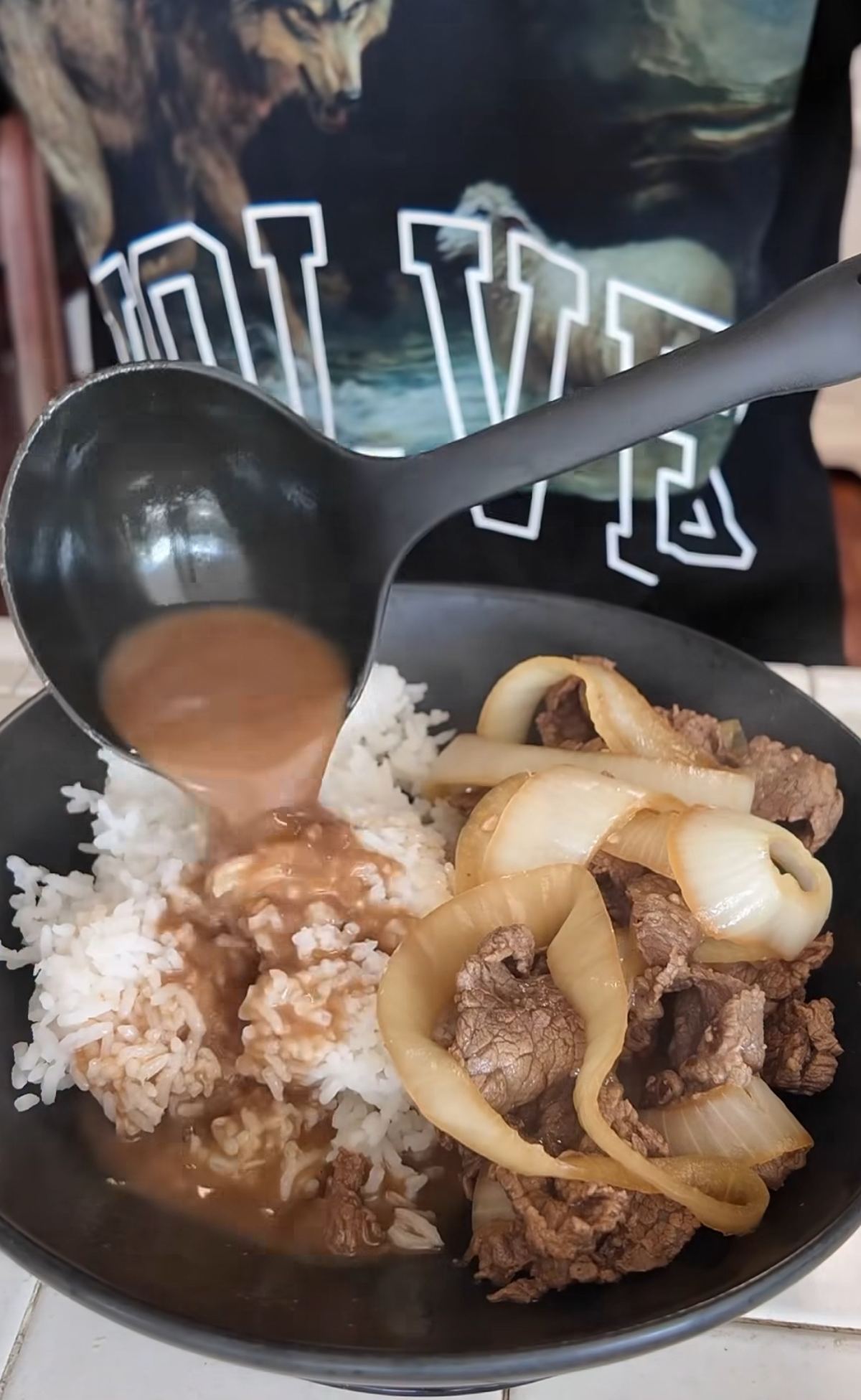
The second is portion discipline with the sauce itself. The purpose of the reduced sauce is to glaze and coat the meat — approximately one tablespoon per serving is the right amount for that job. The tendency to ladle an extra half cup of sauce over rice is where the calorie math breaks down quietly. A well-reduced adobo sauce applied as a glaze delivers the full flavor. Spooning extra sauce freely over the plate adds 150–250 kcal that rarely appears in anyone's food log because it does not feel like a food — it feels like a condiment. It is not a condiment at that volume. It is the highest-calorie component of the meal.
According to the Dietary Guidelines for Americans 2020–2025, saturated fat should remain below 10% of total daily calorie intake. A generous pour of pork belly adobo sauce over two cups of rice can approach or exceed a full day's saturated fat budget in a single serving — not because the dish is wrong, but because the sauce volume was not treated as a macro variable.
Your Action Step This Week
Make one batch of chicken thigh adobo this week using bone-in, skin-on thighs, and remove the skin before you plate the dish. Use your standard adobo flavor base without changing any of the aromatics. Log the protein content before you eat the first serving — target 35–40g protein per plate, with 3/4 cup of steamed or garlic fried rice alongside.
If chicken thigh adobo is already in your regular rotation, make the kasim version instead and compare the texture and flavor against your expectations. Most people underestimate how well pork shoulder absorbs the vinegar-soy base and how close the finished dish reads to a traditional adobo.
The pork belly version stays in the recipe library — it belongs there. The point is not substitution as a permanent rule but rotation as a practical tool. Two or three meals per week using chicken thigh or kasim instead of liempo changes the macro cost of a dish you were already planning to cook, without requiring a different recipe, a different pantry, or a different cuisine. The vinegar is the same. The garlic is the same. The bay leaves are the same. The protein earns its place.
How many calories are in pork belly adobo?
A standard 150g serving of pork belly adobo contains approximately 570 kcal, 21g of protein, and 52g of fat. The high calorie count comes almost entirely from the fat content of pork belly, which renders into the braising liquid during cooking. The vinegar-soy-garlic base contributes minimal calories — the protein cut is the primary calorie driver.
Is chicken thigh or chicken breast better for adobo?
Chicken thigh handles adobo preparation significantly better than chicken breast. Thighs have enough intramuscular fat and connective tissue to stay moist through a 30–40 minute braise. Chicken breast dries out quickly in an acidic braising liquid and loses texture after 20–25 minutes. For a lean version, use bone-in skin-on thighs and remove the skin before serving — you keep the moisture without the fat.
Can you eat Filipino adobo while cutting body fat?
Yes — the version matters more than the dish. Chicken thigh adobo (skin removed) or pork kasim adobo deliver 37–39g of protein per 150g serving at 225–285 kcal, making both genuinely compatible with a caloric deficit. Classic pork belly adobo is not off-limits but at 570 kcal per serving it requires more intentional portioning during an active cut.
How do I make adobo less fatty without changing the flavor?
Three approaches work reliably: switch the protein from pork belly to chicken thigh or pork kasim; skim visible fat from the braising liquid after cooking (or refrigerate overnight and lift off the solidified fat); and use the reduced sauce as a glaze rather than ladling it freely over rice. Changing the protein has the largest calorie impact by far — the sauce adjustments are secondary.
What is the best protein for adobo when you are on a diet?
Chicken thigh (skin removed before eating) and pork kasim are the two best options. Chicken thigh adobo delivers the highest protein efficiency — approximately 6 kcal per gram of protein at 225 kcal per 150g serving. Pork kasim is slightly higher in calories but produces a more traditional pork adobo texture and flavor for people who want pork specifically. Both braise well and absorb the vinegar-soy base effectively.
How much soy sauce is in adobo and does it affect the calories much?
A standard adobo batch uses roughly 1/3 cup (approximately 80ml) of soy sauce for 500–700g of meat, which adds about 50–60 kcal spread across the entire batch — under 10 kcal per serving. Soy sauce is not a meaningful calorie contributor to adobo. The sodium content is significant (roughly 900mg per tablespoon), which matters for water retention and blood pressure, but the caloric impact is negligible.