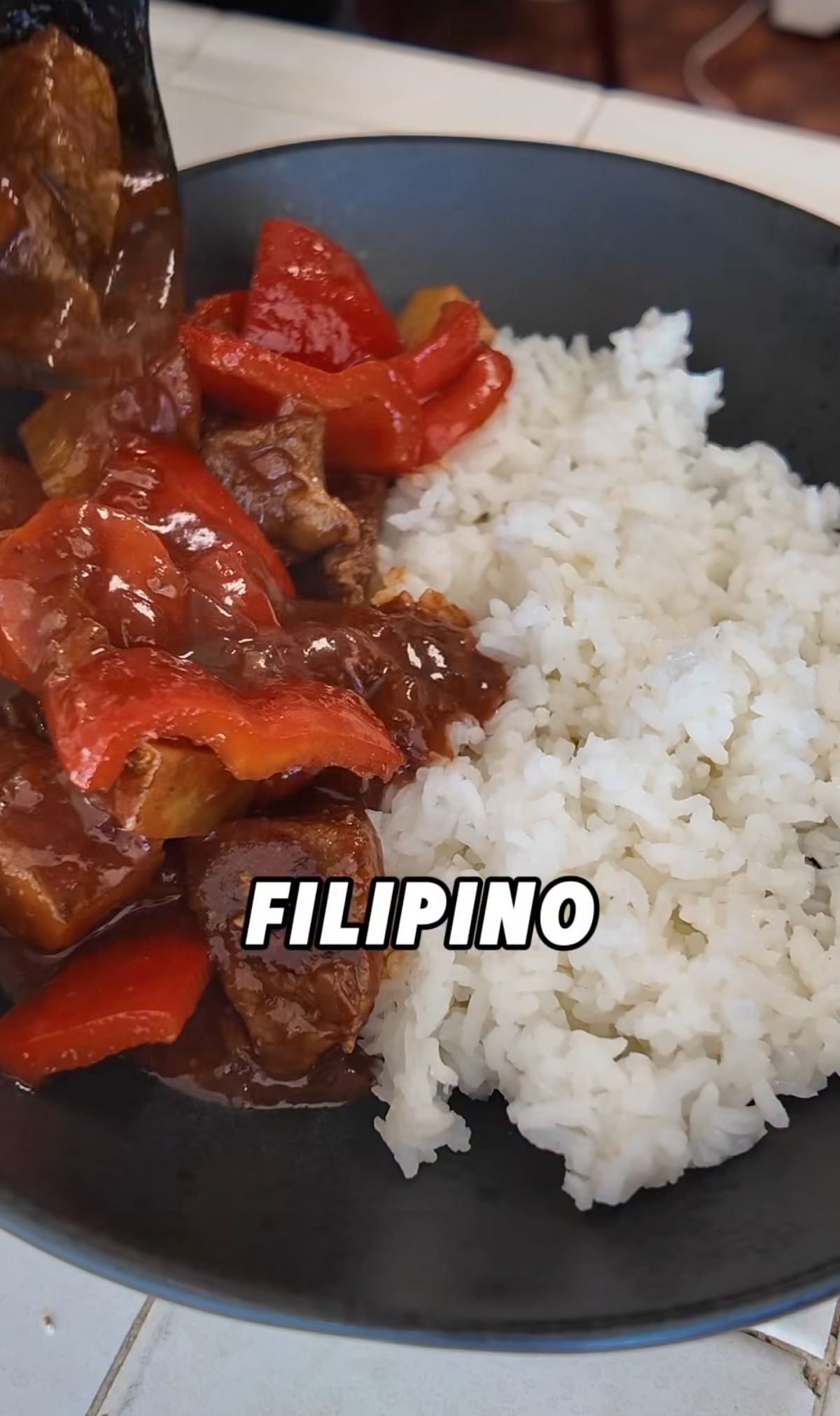
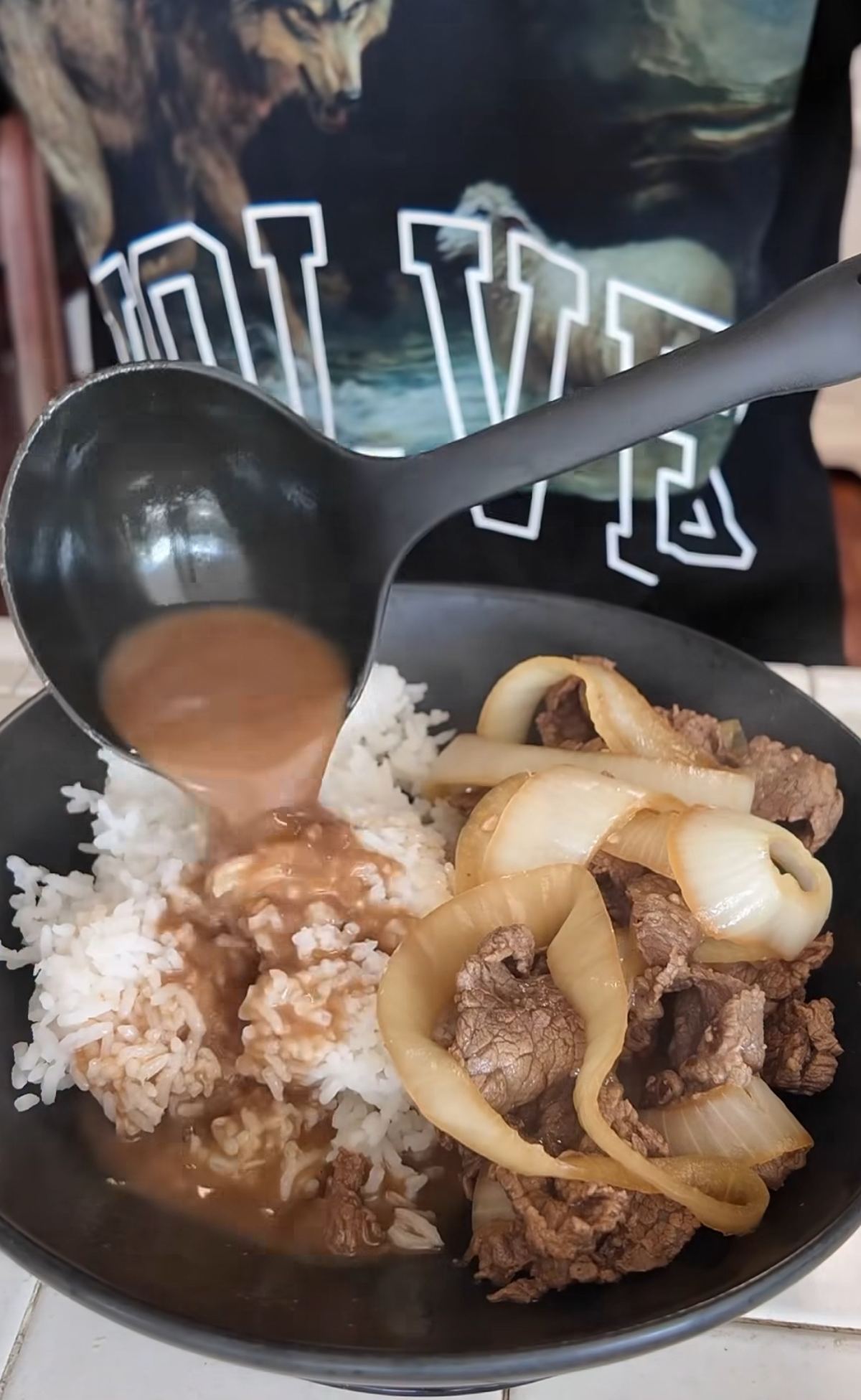
How to Eat Filipino Food and Still Hit Your Macros for Fat Loss
Your lola's pot of adobo is simmering on the stove. Your tita brought pancit to the family party. Meanwhile, you're three weeks into a fat-loss phase eating rice-less chicken and broccoli from six identical meal-prep containers — a menu that has nothing to do with how you actually grew up eating. You're not burning out because the plan is hard. You're burning out because the food has no roots.
Filipino Food Already Has the Macros Working in Your Favor
Filipino cooking is protein-dense by design. The cuisine is built around fish, pork, chicken, and shellfish — all nutritionally significant protein sources. A cup of bone-in chicken adobo (thigh) delivers roughly 28–30 grams of protein. A serving of sinigang na hipon (shrimp in tamarind broth) hits 22–25 grams per cup. A 4-ounce portion of grilled bangus carries around 24 grams of protein and about 8 grams of fat.
Compare that to a 4-ounce grilled chicken breast — you're in the same neighborhood. The protein is already there. What separates Filipino food from standard diet food is the cooking method and what comes alongside the ulam.
Most adobo is braised in soy, vinegar, and garlic — with fat coming from the meat itself or a small amount of oil. Sinangag gets fried in 2–3 tablespoons of garlic oil. Lechon skin is almost entirely saturated fat. These aren't reasons to avoid these dishes. They're reasons to understand portion mechanics. When you know what's actually in your food, you stop fearing it.
The Real Numbers Behind Your Favorite Filipino Dishes
Actual macro data matters more than general advice. These estimates are based on USDA FoodData Central and standard home-cooking portion sizes. Your lola's exact recipe will vary, but these give you a working framework for daily planning.
The dish worth flagging is tocino — the sugar marinade pushes the carb count up without adding meaningful satiety. It's not off the table, but on a day when carbs are already high, it's worth swapping for daing na bangus or grilled tilapia instead.
Tinola is the standout fat-loss meal in this entire list. It's broth-heavy, high in protein per calorie, and the malunggay adds micronutrient density without meaningful calories. If you're in a deficit and fighting hunger, a large bowl of tinola is one of the most effective low-calorie, high-volume meals you have access to.
Filipino Food Macros for Fat Loss: Solving the Rice Problem
Here's where most people actually lose the calorie deficit: not in the protein dish, but in the rice.
One cup of cooked white rice is roughly 45 grams of carbohydrates and 205 calories. That's not alarming on its own. The problem is that a standard Filipino plate is closer to 1.5–2 cups — sometimes more at family dinners. Two cups of rice alone is 410 calories and 90 grams of carbs before you've touched the ulam. If you're targeting 2,000 total calories, that's more than 20% of your daily budget in plain white rice before the protein dish even enters the picture.
You don't have to quit rice. Here is a framework that works without turning every family meal into a negotiation:
A 2015 review in the American Journal of Clinical Nutrition by Leidy et al. found that higher-protein diets reliably reduce ad libitum calorie intake — meaning when you eat enough protein, you naturally consume less of everything else, including rice. The goal isn't willpower-based rice restriction. It's crowding rice out with something more satiating.
How to Hit Your Protein Target Eating Filipino Food
The evidence-based recommendation for fat loss with muscle retention is 0.8–1.0 grams of protein per pound of body weight per day. For a 160-pound person, that's 128–160 grams of protein daily. The ACSM's joint position statement on nutrition and athletic performance supports this range for body composition goals in active adults.
Here's what hitting 140+ grams of protein looks like on a full day of Filipino food:
That's approximately 140 grams of protein on a day that includes rice, adobo, bangus, and tinola. Filipino food, meeting a real fat-loss-phase protein target.
The biggest gap most people have is at breakfast. Sinangag and one fried egg gives you around 6–8 grams of protein. Swap to three scrambled eggs plus a side of daing na bangus and you go from 8g to 35g at the first meal. That single change shifts your hunger trajectory for the entire day — you'll be far less driven to overeat rice at lunch and dinner because you started the morning properly satiated.
Tracking Macros When the Recipe Is "Bahala Na"
The honest challenge with Filipino home cooking is that recipes are not precise. Your mom doesn't measure. Your lola built her adobo by feel over decades, and no one's been writing it down. "Enough soy sauce" is a real unit of measurement in that kitchen.
You don't need perfect tracking to make progress. You need consistent estimation. Here's a system that holds up in actual Filipino households:
Track the protein source by weight, not the full dish. Weigh the chicken or fish after cooking. That's the number that matters most for your goals. The difference between 3 oz and 5 oz of chicken adobo is 14 grams of protein and roughly 80 calories — meaningful over a full week. The exact soy-to-vinegar ratio in the sauce contributes negligible calories per serving.
Use your rice bowl as a fixed reference. A standard Filipino rice bowl holds roughly 150–180g of cooked rice. Once you've measured your bowl at home once, you have a consistent mental anchor. At a family dinner, use that bowl as your reference point.
Log cooking oil as a separate modifier. If you made adobo in 2 tablespoons of oil for four servings, that's about 60 calories of fat per serving. Add it as a separate entry in MyFitnessPal or Cronometer rather than trying to capture it inside a pre-built dish entry. Both apps have Filipino dish entries you can use as a baseline.
Be precise on protein; be reasonable on everything else. The research on dietary tracking accuracy consistently shows that hitting protein targets and maintaining rough calorie awareness drives most fat-loss outcomes — not perfect macro alignment on every day. If you're within 10–15% of your protein goal and in a calorie deficit, you will make measurable progress.
A Full Day of Filipino Eating for Fat Loss — With Numbers
This sample day is built for a 165-pound person targeting a 400-calorie daily deficit at roughly 2,000 total calories, with 145 grams of protein as the anchor goal. This is a real day of Filipino food — not a cultural compromise.
Breakfast — ~400 kcal | 36g protein
Lunch — ~570 kcal | 43g protein
Pre-workout snack — ~200 kcal | 18g protein
Dinner — ~570 kcal | 41g protein
Evening — ~250 kcal | 27g protein
Day total: ~1,990 kcal | 165g protein | 57g fat | 154g carbs
This is a realistic Filipino eating day. There is rice at three meals. There is adobo, bangus, and sinigang. The deficit comes from three specific changes: portioned rice, removing the skin from the adobo thighs, and adding a protein-rich evening snack instead of a second full rice meal. Ten changes were not needed. Three were enough.
Your Action Step This Week
Pick one move. Here's the one that creates the most return with the least disruption: for the next seven days, weigh your rice before every meal using a kitchen scale. Don't reduce the amount yet — just measure what you're actually eating. At the end of the week, you'll have real data instead of estimates, and your actual rice intake is almost certainly higher than what you've been logging in your head.
Once you have that baseline, reduce by 30 grams per meal. That is roughly 1.5 tablespoons of cooked rice — visually almost nothing on the plate. But 30 grams less rice per meal removes about 100–115 calories. If you eat rice twice a day, that's 200–230 calories gone per day, or 1,400–1,600 calories over a week — close to half a pound of fat loss from a single, nearly invisible change. No new foods, no meal prep overhaul, and no generic diet plan that has nothing to do with how you actually eat.
Filipino food built your body. It can build a better one. You just need to know the numbers.
Can you eat Filipino food and still lose weight?
Yes. Filipino dishes like adobo, sinigang, tinola, and bangus are naturally high in protein and relatively low in calories per serving. The main adjustment for fat loss is rice portion size — scaling from 2 cups to ¾ cup per meal creates a meaningful calorie deficit without changing the ulam or the overall cuisine.
How many calories are in a serving of chicken adobo?
A 3-ounce serving of boneless chicken thigh adobo with skin is approximately 180–200 calories, with 22 grams of protein and 10 grams of fat. Removing the skin after cooking brings that closer to 150 calories while keeping the same protein content. The soy-vinegar sauce adds minimal calories in a standard portion.
How much protein is in Filipino food?
Most Filipino protein dishes deliver 20–30 grams of protein per cup-sized serving. Grilled bangus (4 oz) has about 24g, tinolang manok (1 cup with chicken) has around 20g, and sinigang na hipon (1 cup) delivers approximately 22–25g. Tocino is lower in protein per calorie because of its sugar marinade.
How much rice can I eat on a fat loss diet?
There is no single correct number, but 100–150g of cooked white rice per meal (roughly ½ to ¾ cup) is a practical starting range for most people in a fat loss phase. That provides 35–50g of carbohydrates per meal while keeping daily rice calories manageable. The key is measuring rather than estimating — most people undercount rice by 30–50%.
What Filipino foods are highest in protein?
Grilled bangus, tinolang manok, sinigang na hipon, chicken adobo (thigh, no skin), and tortang talong with ground pork are among the highest-protein Filipino dishes per calorie. Dilis (dried anchovies) is also excellent — a 1-ounce serving provides about 11g of protein for under 60 calories.
How do I track macros when cooking Filipino food at home?
Weigh the protein source (chicken, fish, pork) after cooking — that is your most important number. Use a fixed rice bowl as a consistent carb reference. Log cooking oil as a separate line item rather than trying to capture it inside a dish entry. Being accurate on protein and approximate on everything else captures most of the benefit of food tracking.